
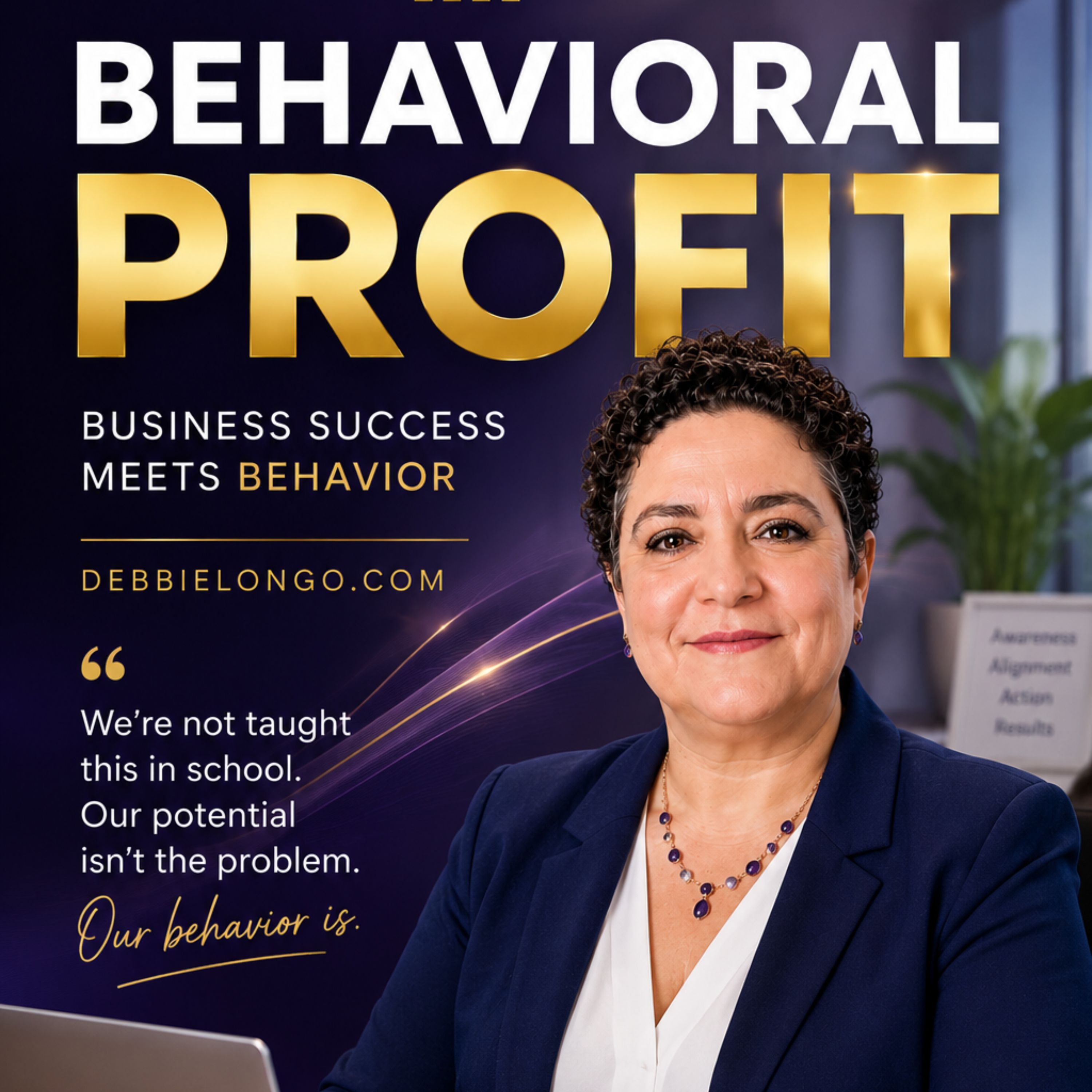
In this episode of Behavioral Profit, Debbie Longo speaks with Sameer Narkar, founder and CEO of Konnect Insights, about entrepreneurship, leadership, business growth, adaptability, customer experience, and the behaviors that drive long-term success.
Sameer shares how he transitioned from software engineering to building Konnect Insights into an international customer experience platform serving businesses around the world. He explains how his original business idea evolved after listening to customers and responding to changing market needs.
Debbie and Sameer discuss why entrepreneurs often need to change direction rather than remain attached to their original vision. Customer feedback, new opportunities, technology, and market conditions all require founders to stay flexible while remaining committed to their long-term goals.
Sameer explains that building a successful company required learning far beyond software development. As the business grew, he had to develop skills in sales, marketing, finance, hiring, partnerships, operations, and leadership while continuing to innovate.
The conversation explores leadership, workplace culture, delegation, employee development, artificial intelligence, customer experience, and strategic partnerships. Sameer shares how growing a company eventually requires trusting others, empowering talented employees, and creating systems that allow the business to scale.
They also discuss the importance of continuous learning, remaining open to change, and breaking large goals into consistent daily actions. Sameer explains that success is rarely the result of one major decision but instead comes from making better decisions every day.
Debbie emphasizes that business growth begins with behavioral growth. The way leaders think, communicate, solve problems, and respond to challenges directly influences employee performance, customer relationships, innovation, and profitability.
Together they explain that successful businesses are built by leaders who remain adaptable, invest in people, embrace change, and continue learning as their organizations grow.
This episode explores entrepreneurship, leadership behavior, business growth, adaptability, customer experience, artificial intelligence, workplace culture, innovation, strategic partnerships, and building a profitable business for long-term success.
Contact Debbie Longo, Executive Behavioral Coach, Founder and CEO Life In Bloom NY
Behavioral Profit
Website: https://www.debbielongo.com/
Email: debbie@lifeinbloomny.net
LinkedIn: https://www.linkedin.com/in/debbie-longo-life-in-bloom-ny/
Facebook: https://www.facebook.com/debbie.longo.2025
Instagram: https://www.instagram.com/debbie.life.in.bloom.ny/?hl=en
Contact Sameer Narkar, Founder & CEO, Konnect Insights
Website: https://konnectinsights.com/
Welcome to the Behavioral Profit Show, where
we look at the behavior behind business results.
I'm Debbie Longo, Executive Behavioral Coach.
And on this show, we go beyond strategy and talk
about the decisions, communication patterns,
leadership behaviors, and internal shifts that
shape trust, culture, performance, and profit.
Today's conversation is about what really drives
change, not just what people say they want, but
behaviors that create the results they get. We
have a very special guest today, Samir Nakkar.
Samir, hi, welcome to the show. Hi, hi. Thank
you for having me here today. Thank you for being
here. Can you start with telling me a little
bit about what you do? Sure. My name is Sameer.
I'm founder and CEO of Connect Insights. Connect
Insights is an omnichannel customer experience
platform. It's a SaaS product software as a service
used by customers across 30 plus countries today.
We have more than 500 plus enterprise global
brands, and they use our platform to understand
what people are talking on the web, social media,
engage with the customers, respond to their queries,
and usually the The whole idea is to make the
customers happier. As a product, we ensure that
we bring in data from all possible channels over
the web. And our customers are mainly the enterprise
B2C brands, business to customer brands, or customer
facing brands. Because this customer's ex -opinion
is across channels, we are the one who bring
that all from all different channels and make
sure that they have a great customer experience.
So that's what we do today. It's a well -known
product in the market with the name Connectinsets.
Thank you very much. I appreciate that. I was
wondering if you could tell us a little bit about
you started this business. I know we spoke a
little bit about the growth and the progress
that you've made in your business to grow six
figures, seven figures. So it wound up to be
a very successful business. So can you explain
a little bit about the very beginning about you
and exactly how you were able to develop the
business and how it was able to grow this much
and what period of time and where you are now?
If you could do that for me, I would appreciate
it. 10, 20 years back, obviously I started my
career as a software engineer, worked for about
seven years in three different companies, made
sure that I was one of the best software developers
to start with. And then I had this idea, which
was not the original idea of what a product is
today. It was something to do with an app, which
had kind of analytics and insights for the business
owners. But instead of the app that we were planning,
we actually went on to make a product that was
into takes insights and so on and so forth. And
once we started to engage. with the customers,
that's when realized what we were thinking initially
was not the whole world, what it really wants.
So we pivoted. It's not the pivot only didn't
happen at the start. Any successful journey is
built with a lot of changes according to the
market requirements and how things change. Today
also, when there is AI, we are building so many
features. So it started in that fashion. And
in early days, it was just me who had this idea
and I was developing the app. Thereon, after
that, I had few interns who joined because Obviously
as a small company with no funds, you cannot
have a team where you can pay. So I hired a few
interns, didn't pay them, told them that tomorrow
when something happens, it will be a good experience
for you. I didn't think that time that those
interns will go on to become the founding partners
for me. So it just happened that we were able
to retain a few interns and then the company
has now grown to about 150 plus employees. But
in early days, I would say beginner's luck, it's
there for everyone. I thought it worked for me
and then few customers. We made sure that the
marketing agencies who could open doors for us
with the larger customers. We built very strong
relationships with them for about six to seven
years. All our customers were from India. We
started, but gradually we started to build partnerships
globally. Started from Middle East, then Southeast
Asia, then Africa, then parts of Latam, UK and
few customers. in US. That's how our journey
really started. So wherever we could do some
business in any other market via partners, we
generated revenue from there and then went on
to build our teams in that region. So it's a
completely bootstrap story. We never raise any
external funds in early days. Obviously it was
very difficult for us to raise funds, but as
we gradually acquired more and more customers,
the product itself started paying six, seven,
eight years of very difficult journey. I won't
say it's not difficult now, but given the fact
that we have a large customer base, it's highly
profitable and things are going well. And we
hope that we continue to grow for next 10, 20
years. So that's good. Thank you. So did you
basically have the will to do this from the very
beginning? Did you have an insight that you had
any idea that the business was going to become
what it is today and it was going to grow and
what your goals are and different things for
the business and a little bit about the products
that you are selling as compared to what you
thought was going to happen originally, if there's
any insight or anything about that. Can you explain
that a little bit? why just have to work beyond
a year or two? And in early days, it is more
about survival than executing your plans because
there are a lot of uncertainties. So in early
days, it was definitely not very crystal clear
as to where we want to go. But after about four
or five years, I can probably say that where
we are today was something that we could envision
in our early days of 2018, 2019. we knew where
we have to go. By the time we reach D30, we'll
have some clarity in 2035. So it's a gradual
process and constantly you have to evolve and
make sure that whatever you're building is something
that is at the core of what customers need and
what the market needs. And always ensure that
whatever tech that has been built globally, you
are on the beneficiary side of, because any new
tech can kill you or you can benefit out of.
So be on the better side of the tech involvement
that is. That was very good. Thank you. So the
reason why I asked is because some people do
have that insight. They just know that they start
this little business and it's going to grow to
this huge business. So they have that type of
goal. And with some people it works gradually.
So I work with a lot of different business owners
and executives that have this experience. So
sometimes it just happens on its own. Basically,
this is really. one thing that we're trying to
really explain here on this show is to show everybody
that things happen. They can grow their business
or make a business from nothing in all different
ways, not just the way that I think a business
is going to happen or the way that I want to
grow my business is the way that it's going to
be. It doesn't always work like that. Sometimes
the insight might come from me or the vision
might come from me. And sometimes it comes from
something else or somebody else. Maybe somebody's
trying to help me, or maybe I have influence
from the media. There's a million different places
that I could get my information from if I want
to grow my business. So it's just for me, just
about having a little bit of an open mind and
saying that if I want to grow my business or
even if I want to start a business, if I just
have that vision, there are all different ways
that I could get information. I'm just talking
about one thing, just getting information. We're
talking about a lot of things, increasing employees
and profits, but I'm just saying, do I have a
vision and what is my thought and how am I going
to maybe predict or what is my goals that if
I start a business or whatever, and then I'm
going to grow my business. So this is really
a very good topic because this is one thing that
we're trying to do. But also I could even ask
the listener, what is your outlook on this? What
is your opinion? you getting out of this conversation.
And this is one of the reasons why I do this
show because I don't want it just to be a show
where we talk about our business. So there's
all different topics and everything, which is
the reason why we do this, because I want people
maybe to feel motivated, like I said, about starting
a business, growing their business, whatever.
And there's all different ways to do that because
we can always expand our knowledge and we can
always make our business from five figures to
six. It's always doable. It's always possible.
And am I holding myself back from doing these
things? Am I just using the resources that I
have and not growing myself or expanding my knowledge
to grow my business? Am I limiting myself, my
mind, my behavior, my attitude to just stay where
I am and leave the business this way? And this
is an example that you gave. You started from
nothing. That's why I'm asking these questions.
because sometimes it just happens. It's like
a chain of things when I just got lucky. Not
always though. Sometimes people have visions
or an outlook or an opinion or whatever, and
they want to use that, grow with that, expand
on that. But do they know how to do that? That's
the question. See, market dynamics change. When
you start, you have different ideas altogether.
As you start building, different things happen.
Not just the product that you're changing, but
the things that are happening around you. You
get feedback from the customers. You react to
a certain situation. You learn. from the mistakes
that others have done. You get into the community
where others have built products. You learn from
them. And then you realize that your initial
idea may not be the best one. Then you have a
choice whether to go back and get into the comfortable
job or continue struggle for next three, four
years and learn. Because when you start on your
own, you're not obviously knowing everything.
I was a good software lover. I had no idea of
how sales happens. I had very few understanding
of how marketing works. never wrote any content,
very little idea of how accounting and finance
works. Of all the SaaS metrics that I teach today,
I knew nothing when I started. So those are the
things that you have to learn because you are
actually in the middle of it. Who likes to read
legal agreements? But I spend so much of my time
reading the legal agreements. You don't like
them. So that's one offering. When you start
something on your own, it's a blessing in disguise
that you learn a lot of things than what you
would otherwise do with a career where you're
only focused on one thing. So that's a wonderful
part of starting your career. And I always say
that you have to adapt to the market. Two years
back, we envisioned that AI could change so many
things. So what do we do? We ensure that our
product is something that offers great AI features.
Over a period of time, you are going to learn.
You have a team around you. You need to ensure
that you build a culture where that team grows
and you hire people who are even smarter than
you and they do the things and you take the backseat
whenever necessary. So as a team grows, you don't
have to be the smartest person in the team, but
you have to be someone who is smart enough to
hire smarter people than you and build a culture.
In a journey of about 10 years, this is what
I've learned and many years to go. It's an exciting
world to be in. If you are building software
today, it's a very exciting world to be in because
you can do a lot of things that you couldn't
do maybe even three years back. I agree. Thank
you very much. And I appreciate everything you
said about your journey, your path, all these
little tips that you just gave about how you
started your business, you grew your business.
And these tips hopefully will... help somebody
that's interested in not only developing a software
business, that's a fantastic business because
that's something that's always growing. I think
people always want to learn. There's a very good
chance that can easily be a six figure business,
but there are all different types of businesses
out there. And these tips that we are giving
today on this show can be used for any business.
You could take the word software out or take
the name of your company out. Insert your company,
insert your product that you sell. And that will
be the same thing because I can make that process
similar to what you're explaining. And then I
can use these tips and these ideas. And you didn't
only explain ideas, you explained a process.
What happened? How did it start from the very
beginning? And there's things in that also that
business owners could use. I really appreciate
this. Where is your business today? Is it profitable?
And how do you... feel today about all the progress
that you have made, which is everything we basically
talked about in this whole podcast so far. And
the progress that you've made equals everything
that your business is identified with and represents
today, the amount of people. If you could talk
a little bit about that and how did your business
come to this level? About six years to actually
get to one million and from one million. to 10
million, it was less than five years. That's
the growth. We are a team of about 150 today
in different parts of the world. Our headquarters
is in India, Mumbai, but we have teams across
regions like from Singapore, Indonesia, India,
of course, UAE, Saudi Arabia, Africa, UK and
Brazil and few guys in US. Growth of about 16
to 18 % is what we are doing for the last few
years and looking forward to it. We work with
large enterprises in an account also once we
set up our customers, there's a lot of growth.
possibility in one single account. The teams
that we work with today within our organization,
software teams, marketing, sales, we have folks
in growth, international partnerships that are
admin and so on. That's how we have grown our
teams. It's been a great journey. I would love
to carry this momentum to the next few years
and see where it goes from here. We are very
strong on the AI front. We have developed a lot
of proprietary AI features within our platform
that makes life much more easier for our users.
Looking forward to what next year presents to
us and just be our best version. Of course, there's
a long -term vision of where we want to be in
five years time, in 10 years time, but at the
end of the day it is all about what you do today
because you yearly plans, then come to quarterly
plans. And at the end of the day, you have one
day where you can give your best. That's how
the process works. That was very good. That's
more insight. Maybe if somebody wants to try
growing their business or whatever, or try something
new. In closing, I would like to say that this
is for somebody who is in the business world.
This is a journey where they can progress in
their life and in their business and in their
career. and they can meet their goals. It's just
a matter of having an open mind and taking suggestions
and not staying where you are and not limiting
yourself to this is my job, this is my career,
this is my business and it's not gonna go farther
than this because there's always opportunities
and there's always growth and there's always
a way for us to move to the next level. And the
only way that... that we could do that is we
create the willingness and then we take the next
step forward. And then sometimes you'll see that
there's people there all of a sudden that want
to help you and they know, and they have the
knowledge to help you get to the next level,
whatever it is. And this is why I have this podcast
that has all different topics. So it's about
us trying to do some different things. And that's
how we'll be able to advance in our lives and
then the world. advances and that creates a better
world for us and everybody. Thank you for listening
to the Behavioral Profit Show. If this conversation
gave you a new way to think about leadership
behavior, communication, or business growth,
make sure you follow the show so you don't miss
future episodes. You can also learn about my
work, upcoming episodes, and great opportunities
at DebbieLongo .com. I'm Debbie Longo, and when
you understand the behavior behind the outcome,
you can create stronger decisions, better communication,
and more profit. Thank you, Samir. being on the
show, I appreciate. Thanks a lot.